
The Future is Brightline
Brightline West as a Blueprint for Large-Scale Infrastructure Development in America

(5/1) - Have you ever been on a train? Not a metro train or one of those speedy little things between airport terminals, I mean a real deal train that can take you from one city to another. In many developed countries the answer would be a resounding yes, but in the United States, passenger rail lags significantly behind its counterparts on the roads and in the sky.
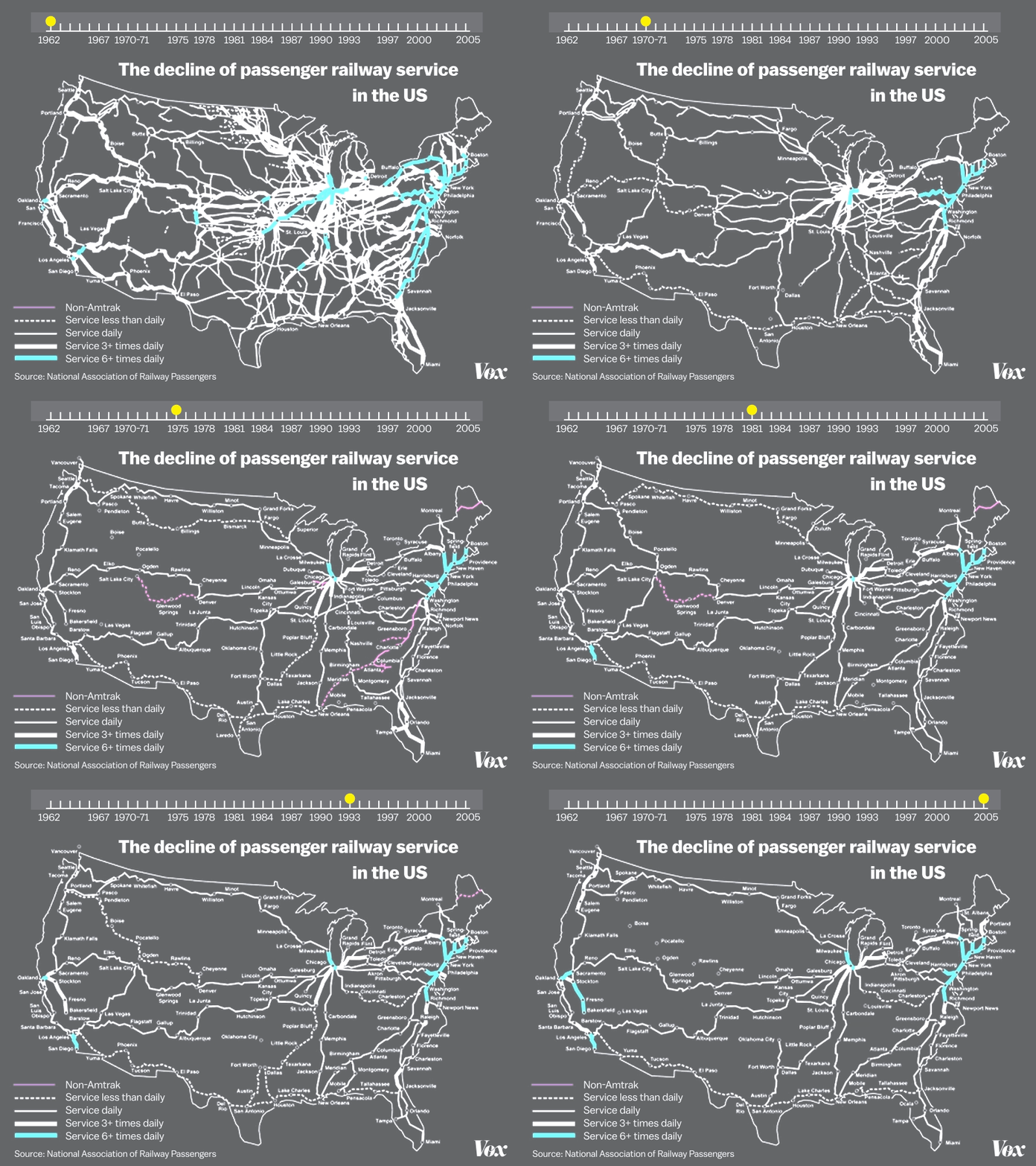
This was not always the case; in fact, the U.S. was once the global superpower in passenger rail with over 254,000 miles of tracks at its peak in the mid-20th century. That all changed with the adoption of the Interstate Highway System in 1956, causing a boom in automobile popularity and a sharp decline for railways. In the decades since, the once flourishing rail network shrunk by roughly 100,000 miles and the industry consolidated around freight. But that seems to be changing, as public interest grows and billions of federal dollars flow into the industry.
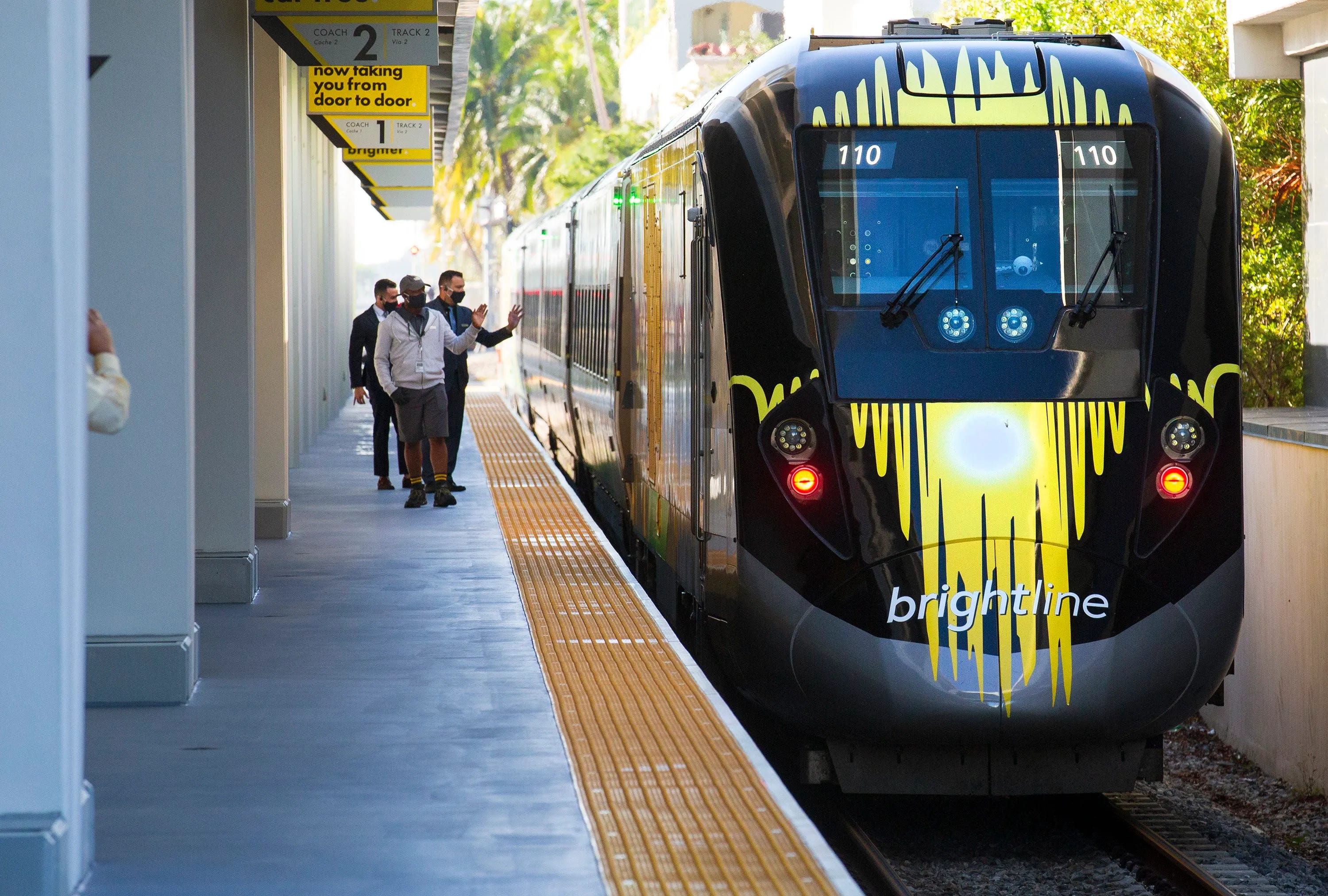
Brightline–the only privately owned and operated intercity passenger railroad company in the U.S.–began construction in April on a high-speed rail between Las Vegas and Los Angeles. The $12 billion project will produce a 200 mph electric railway, cutting the travel time by car between the cities in half and removing millions of vehicles from the I-15 interstate. Utilizing $3 billion in funding from the Bipartisan Infrastructure Law, the company will work in close coordination with the federal government to complete the project in an ambitious four years. The Bipartisan Infrastructure Law–which provides $550 billion in funding for an array of infrastructure projects from bridges to broadband internet–offers a unique opportunity for government and private enterprise to achieve mutually beneficial goals, and Brightline West should serve as the blueprint.
Owned by the New York private equity firm Fortress Investment Group, Brightline is no stranger to big projects. They developed 235 miles of passenger rail between Miami and Orlando over the last 14 years. While their plans for continued rail development from Orlando to Tampa and Jacksonville are impressive in their own right, the Brightline West project marks a more momentous accomplishment: an interstate infrastructure project undertaken by a private firm with billions of federal dollars and highly integrated federal oversight. In technical terms, this is known as a public-private partnership (PPP), and an impressive one at that.
Though previous generations saw the federal government plan and undertake massive infrastructure projects like the interstate highway system, such centralized development is difficult in today’s world. Why? Consider your last experience at DMV, or the time it took for that pot hole on your street to get fixed. Public organizations play an important role in society, like regulating markets and ensuring public safety, but they don’t exactly elicit innovative prowess. Instead, governments often turn to private enterprise to finance, plan, and execute large projects over long periods of time. Like Brightline, companies can secure preferential financial incentives while advancing public agendas.
Yet, PPPs are not always successful and sometimes receive criticism for allowing perceived exploitation by for-profit actors. The City of Chicago’s 75-year lease agreement with Chicago Parking Meters, LLC (CPM) in 2008 serves as a great example. A consortium led by Morgan Stanley, CPM paid the city $1.16 billion in up front funding for the operation of the city’s 36,000 parking meters; a payment which critics argued was several billion dollars less than the true value of the meters’ expected revenue stream over the course of the lease. The city, rather than investing in long-term civic improvements, primarily used the money to fill budget deficits. Further, the contract effectively relinquished control over the parking meters to CPM, allowing the consortium to significantly raise parking rates by as much as 800%, and significantly restrict the city’s ability to adjust parking policy.
While Chicago’s mismanagement demonstrates the public risk of a poorly structured PPP, private partners must be wary of risk as well. In 2003, for example, the Metronet Rail consortium partnered with the City of London to upgrade and maintain the majority of its underground rail system (the Tube as the Brits call it). The structure of the PPP imposed significant financial risk on the consortium, and when costs ran several billion pounds over budget, they were expected to cover the excessive shortfalls. At a considerable loss to the consortium’s stakeholders, Metronet was forced to restructure and eventually hand the project back to the city. Not only did the business take a massive hit, but the tube was still in need of repair and the city was back at square one.
Though such failures are unfortunate, they demonstrate poor planning rather than a fundamental flaw in the PPP. A well-structured PPP is still highly efficient and mutually beneficial, as the 2014 collaboration between the City and County of Denver and multiple private investors illustrates. Recognizing the need for improved public transit and a revitalization to the downtown Denver area, the partnership aimed to re-vitalize the 100+ year old Denver Union Station. By clearly outlining a shared vision and capitalizing on strong leadership from the public sector, the partnership created an enhanced transportation hub and economic development that continues to benefit its private investors and the community as a whole.
Considering the complexity of large-scale infrastructure projects, especially across state lines, the utility of PPPs becomes evident. To achieve the many goals outlined in the Bipartisan Infrastructure Law, and more generally to prove America can do big things, policymakers and businesses alike should look to Brightline West with interest. Though the project is far from finished, its structure suggests a well-planned and engaged network of like-minded decision-makers. Brightline’s expertise and track-record of success give the government–primarily the Department of Transportation and its many off-shoots–the confidence they need in a partnership of such magnitude. Likewise, the government provides the financial transparency and general authority to remove bureaucratic speed bumps that Brightline cannot bear alone. What’s more, the company’s commitment to union labor and safety standards offer a nice trade-off for a Biden Administration that is keen to parade the project as its own.
As a fan of trains for their spacious cabins and exciting, albeit frenzied platforms, I look forward to riding a high-speed rail in the U.S. one day. I took a couple Amtrak trips between Birmingham to New Orleans, and though the first trip was novel, we went in reverse for a good 20 minutes to make way for a freight train. I still strained to see the glass half full. As hundreds of billions of dollars flow into American infrastructure, I look forward to the lived improvements they provide us. I can only hope that they’re executed with ambition, yes, but understanding and efficiency too.
Extremely well written, insightful, and an exciting subject matter with hopeful implications. Well done Mr. Lasseter.
Brightline is your best substack so far. I’m glad to hear that rail may become a fast and easy way to travel for your generation. It’s sensible and practical, no to mention smart. The PPP for Brightline is promising.