
The Challenges Ahead for America's Electric Grid
How the Grid is Evolving to Meet the Demands of a Very Near Future

(6/1) Take a moment to think about the electricity you use in a day. Are you in a room with the lights on? What about the A/C? We use electricity so frequently that it is easy to forget what an amazing accomplishment it is to power a single lightbulb, much less an entire building. But for the millions of professionals who built the grid and keep it running, this accomplishment and its complexities are front of mind.
From Benjamin Franklin’s kite-flying expeditions in 1752, to Nikolai Tesla and Thomas Edison’s “Battle of the Currents” in the late 19th century, the modern grid is built on the discoveries of previous generations. Ben Franklin didn’t invent electricity, he was studying the discoveries of people like William Gilbert and Stephen Gray who came before him. The human capacity to collaborate and build on past discoveries is what propels us forward. As John Greene wrote, “What’s most interesting to me about humanity is not what our individual members do, but the kinds of systems we build and maintain together. The light bulb is cool and everything, but what’s really cool is the electrical grid used to power it.”
While technical difficulty is no new challenge in the world of electrical engineering, we now face a multi-faceted point of exceptional technical difficulty. As a population we consume electricity more efficiently than 20 years ago, yet technology demands marginally more than before. And though we need to expand our capacity for power generation, the negative externalities of unchecked generation are forcing us to rethink and reimagine how electricity should be harnessed and shared. As the grid grows more dynamic and decentralized, what inventions will we carry with us from the past, and what new ones will come along the way?
What is the Grid?
On a basic level, the grid is a machine that functions through three phases: generation, transmission, and distribution. Generation primarily comes from power plants, dams, or renewable sources. The electricity from these generators is then sent out along transmission lines. Like a highway system, transmission lines allow large flows of electricity to travel from one place to another. You’ve seen them your whole life–the big towers holding power lines way up in the air. At various points, these transmission lines will connect to a substation where the electricity is either broken down into a lower voltage or sent in another direction. You can think of substations as off-ramps or roundabouts. Once broken down, power is sent out along distribution lines until it reaches its final destination. You’ve seen these poles too; they are the wooden ones standing by the street.
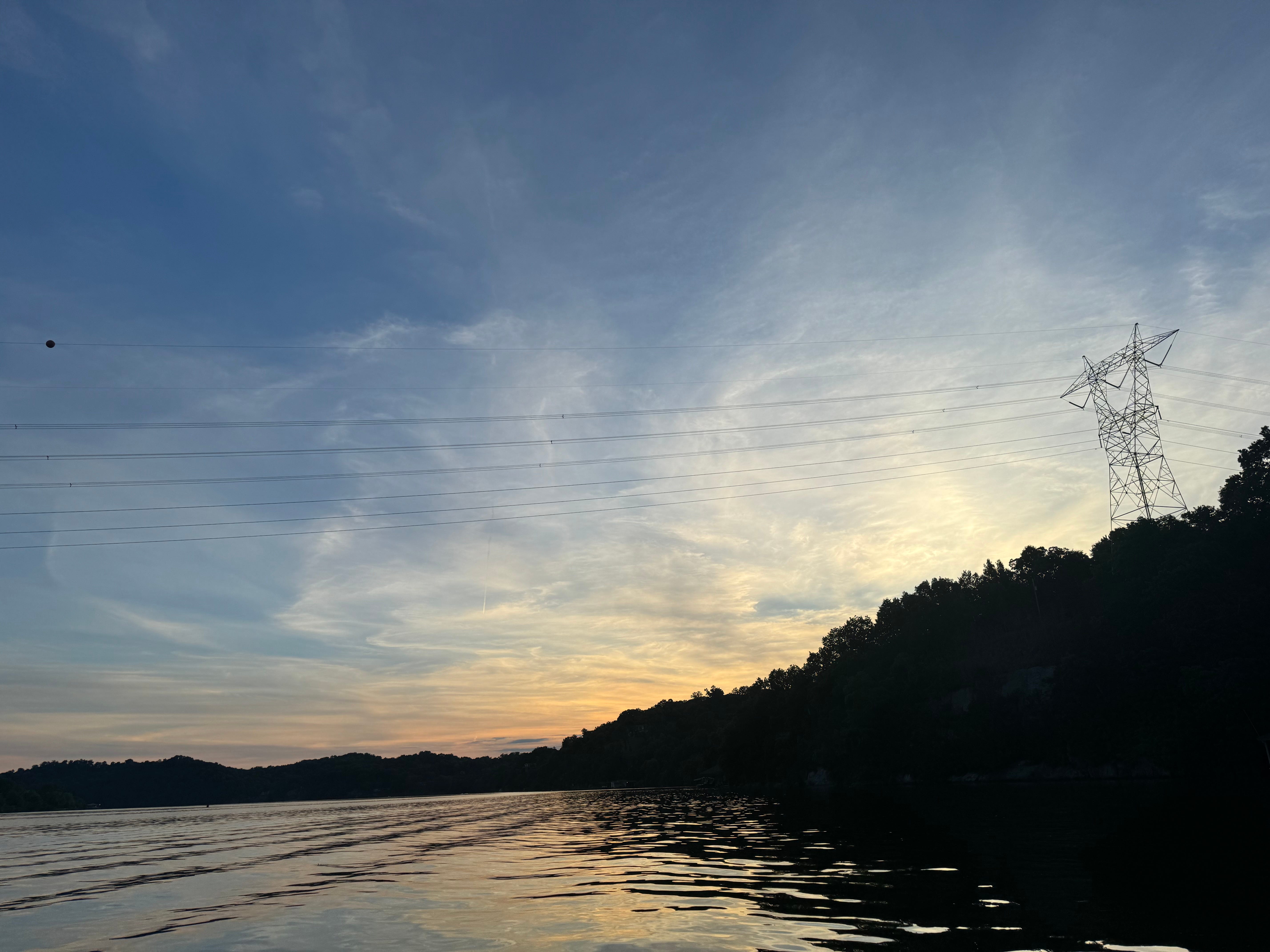
For the last century or so, this was exactly how the North American grid operated. Utility companies sent power to their customers who sent back a check every month. But that relationship is changing. Renewable energy sources, like residential solar, are creating less centralized generation by allowing households to generate their own electricity and, in some cases, sell unused power back to their utility company. Many commercial users like schools and businesses are also opting for local solar generation, which eases strain on the grid but requires a more dynamic power-sharing framework. Though renewables are crucial pieces in the fight against climate change, they are an unnatural addition to a highly-centralized grid.
Problems and Solutions
Unlike the human body, which consumes and often stores calories for future use, the electric grid uses the electricity it generates instantaneously. So just as the sun is going down and solar generation ceases, people are getting home from work, turning lights on, leaving them on at work, etc. This is known as “peak load” and power plants are forced to supplement the gap left by wind and solar (yes, there is less wind at night). The challenge of solving this issue is twofold. First, the integration of long-term battery technology is crucial to harness the power generated by renewables during the day. Second, buildings must become more efficient energy consumers. Termed “smart-grid technology,” homes and businesses must be able to send information back and forth between grid operators in order to automatically scale down unused appliances throughout the day, but especially during peak load.
Another key component to this equation is the improvement of transmission and distribution systems (T&D). Let’s say it’s 7:00 PM in Colorado and the wind is really wind-ing in the Front Range due to a storm-surge. But Phoenix, AZ is experiencing peak load and could use some help. Rather than firing up the coal plants in Phoenix, a robust transmission system allows states to more efficiently share power in real time. While this is possible and certainly happens, many regional transmission operators (RTO) and utilities own their own transmission lanes and aren’t keen to share. Increasing the number of transmission lanes, improving the efficiency of their conductors, and creating shared lanes will allow RTOs to trade power more efficiently. A recent rule by FERC made huge steps in this arena.
As for distribution systems, meaning the wires that run from substations to your home, improving their capacity to withstand storms is a challenging yet achievable goal. When power lines fall, not only do consumers lose power, but fires can start and people can get hurt. Just ask the Maui residents whose island was burned to the ground by a downed distribution line after a storm. The unimaginable loss of a tragedy like Maui cannot be summed up in mere dollars, but even storms where the loss of life and habitat are minimal see hundreds of millions of dollars lost to the reconstruction of T&D systems. Thankfully, storm-hardening initiatives are passing Public Utility Commissions in states like Florida and Louisiana and will need to continue to do so as climate change brings increased storm-surges.
The Nuclear Question
Governments and corporations around the world are keen to advance new technologies like AI, big-data, and EVs, and these are huge electricity consumers, yet they do so while promoting ambitious climate goals to cut global emissions. The electric power industry is a primary contributor to global emissions; roughly 60% of electric generation in the U.S. is created with fossil fuels. There is a gap between the exorbitant energy demands of these technologies–demand that far outpaces normal population-based growth rates–and our capacity to generate reliable, clean energy. Figures like Sam Altman of OpenAI and Elon Musk of, you know, a lot of stuff, both claim our current generation trajectory will not meet the needs of future technology. As a result, they are lobbying heavily for the proliferation of nuclear energy, as am I.
So why don’t we have more nuclear energy? If you didn’t know, nuclear is the most energy dense generation source we have, and its a clean energy technology, meaning it does not emit carbon. However, it only makes up 19% of electric generation in the U.S. Considering that the first nuclear reactor was brought online in the 1940s, it is astonishing that this technology, which solves so many of our issues, is lagging behind. It is highly reliable and would easily manage peak loads. And unlike every other form of energy generation, its byproduct is not emitted into the atmosphere, it is recycled or stored securely away. Even solar panels wither away and need replacement; their parts are sold overseas and broken down for parts or discarded. Despite its utility, the nuclear industry was ramped down amid safety concerns in the 70s, creating a regulatory web and a lack of large-scale developmental expertise in the U.S. that currently holds it back. The unwinding of these limitations will be crucial to meet our climate goals.
According to the U.S. Energy Information Administration (EIA), the U.S. consumed a record-breaking 4.07 trillion kWh of electricity in 2022. That’s about the equivalent of charging 800 trillion iPhones. Though modeling future consumption is difficult and rests on a multitude of social and technological variables, a study by Statista predicts U.S. consumption will rise by roughly 27% to 5.2 trillion kWh by 2050. Clearly, we need more electricity, but the way we manage and consume it must be more efficient. Whether we like it or not, the big tech companies fueling much of this demand growth are not going to slow down. The innovators of our day and age must balance the advancement and growth of society while protecting from its side-effects. There is no one answer to this problem, it will require the collaboration and cooperation of us all to maintain this system we so desperately need.
Hi Julie, I really appreciate your feedback. And what an incredible example you give about your father. Thank you for sharing. If you’re interested, I wrote a Substack piece on how emotions have played a large role in nuclear energy policy. I’ve come to learn there is more nuance, more moving pieces, but much of it I still think rings true. Here’s the link: https://open.substack.com/pub/jameslasseter/p/ai-governance-with-2020-foresight?r=2d0mov&utm_medium=ios
For me personally, it’s very interesting to stumble across this article at this time. My father is a lung cancer survivor, but he requires an oxygen machine every minute of the day. When the last big storm blew through Dallas, everyone was out of power for at least 3 to 5 days. This meant my dad had to rely on nothing but his own lungs to get air, and unfortunately, they are so compromised that they can only oxygenate his blood 82%. That’s way too low, like death low. Fortunately, my brother, who lives in Dallas, bought dad a home generator so that he will always have access to electricity. At that moment, I realized that electricity keeps my father alive. Sure I’ve experienced some power outages and even lost some food from the freezer, but I haven’t been faced with gasping for air during such outages. Thank you for calling attention to this issue, and I’m glad to read your support of nuclear energy. Personally, in my ignorance, I’m afraid of nuclear energy. This probably comes from being a child of the 1970s. But if someone as bright as you says that nuclear energy is the way to go, then I am more than happy to see your generation put that in place.